
It is a well-known fact that Kabuki is a type of traditional Japanese theatre.
In the 16th century in Japan, the word “kabuki” consisted of three hieroglyphs, the first of which meant “song, melody”, the second – “dance, movement”, and the third – “art, skill”.
Therefore, theatrical performances were based on a unique combination of dramatic, dance, and musical elements. It was this combination that conveyed the inimitable effect of complex dramatic art, coupled with the professionalism of the actors and the vividness of the stage images.
Another unique element of Kabuki is its close connection with the audience. A distinctive feature of theatrical performances was the "Hanamichi" ("Flower Path")—a platform that connected the auditorium to the stage, giving the audience a sense of complete presence. Naturalness, ease, and a wide range of emotions and sensations conveyed to the audience are the hallmarks of Kabuki theater.
Few people know that the word "kabuki" originally comes from the verb "kabuku," meaning "to deviate, to be different, to be unique, to be different." This word was used to describe the behavior and vibrant, unconventional costumes of young people who wanted to live a peaceful life after long wars and enjoy their surroundings. Over time, this became the basis for the development of one of the world's unique theatrical traditions.
The development of Kabuki theater is closely linked to the flourishing of Japanese urban culture, and its roots reach deep into folk traditions and centuries. Today, Kabuki remains a masterpiece of world heritage, highly valued throughout the world.
There's an interesting style of Kabuki theater called "Mi," where the scenic beauty of a scene is enhanced by an actor frozen in the exact pose at the precise moment. Then, the audience can fully appreciate the significance and uniqueness of the moment—here and now.
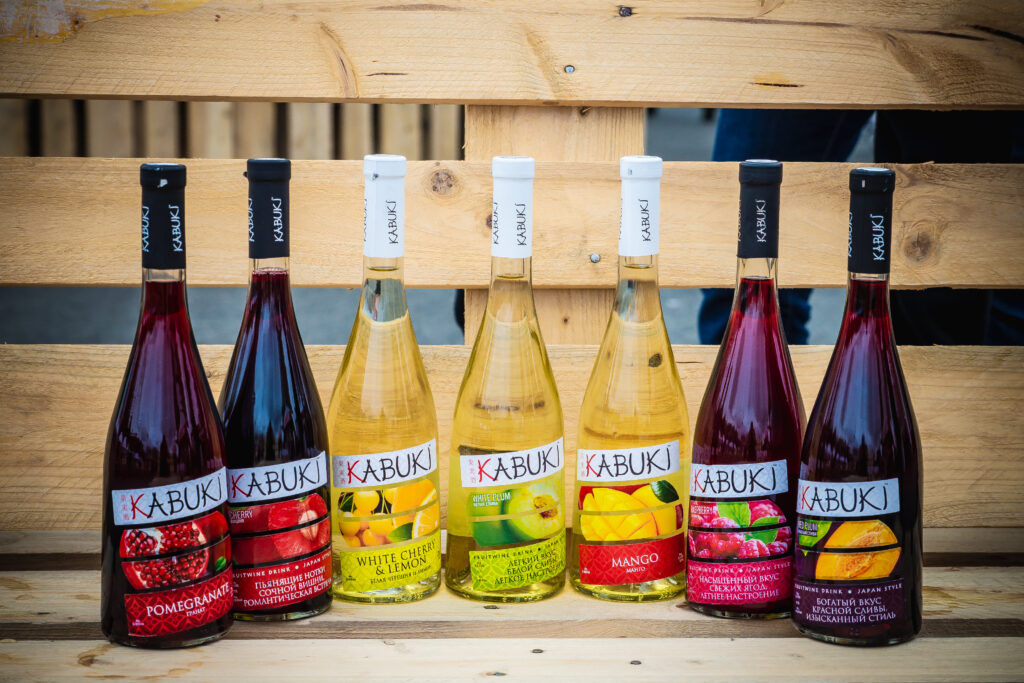
This is the motto of the Kabuki wine line - “Feel the brightness and richness of life here and now.”
The dramatic dance of Kabuki, which incorporates music, movement and emotion, is a reflection of the Universe in which a person feels fully himself.
Kabuki Wine Line It not only incorporates the unique taste of Japanese fruit wines, but also embraces the aesthetics that date back centuries, combining the Japanese art of creating ancient drinks with the professionalism of modern Moldovan winemakers.
It's no wonder wine is called the drink of knowledge. The Kabuki brand's philosophy is based on projecting the world of wine onto modern life, in all its diversity and uniqueness, with the goal of revealing the inner world of each person. "Wine is a social drink," claims the Kabuki brand.
Read more about the brand's philosophy in the article: Experience the tastes of Zen in discovering Stanislav Nerukh's Kabuki wine.
Our audience is those “kabuku” people, bright young people, different from everyone else, who want to explore the world and enjoy life to the fullest.

The unique fruity and rich flavors of the Kabuki line — in its absolute originality, the combination of fruit aromas and the brightness of impressions from the Universe surrounding a person.
Kabuki wines are a fusion of Japanese symbolism, deep sacred meanings, the vibrant theatrical performances, and fruity flavors conveyed through the atmosphere of travel, communication with friends, the exploration of other cultures, and genuine emotions.
You will find all this in the unique taste of Kabuki wine!
Taste it yourself!



 EN
EN  RU
RU  UK
UK  ES
ES  DE
DE  FR
FR  IT
IT  TR
TR  AR
AR  ZH
ZH  JA
JA